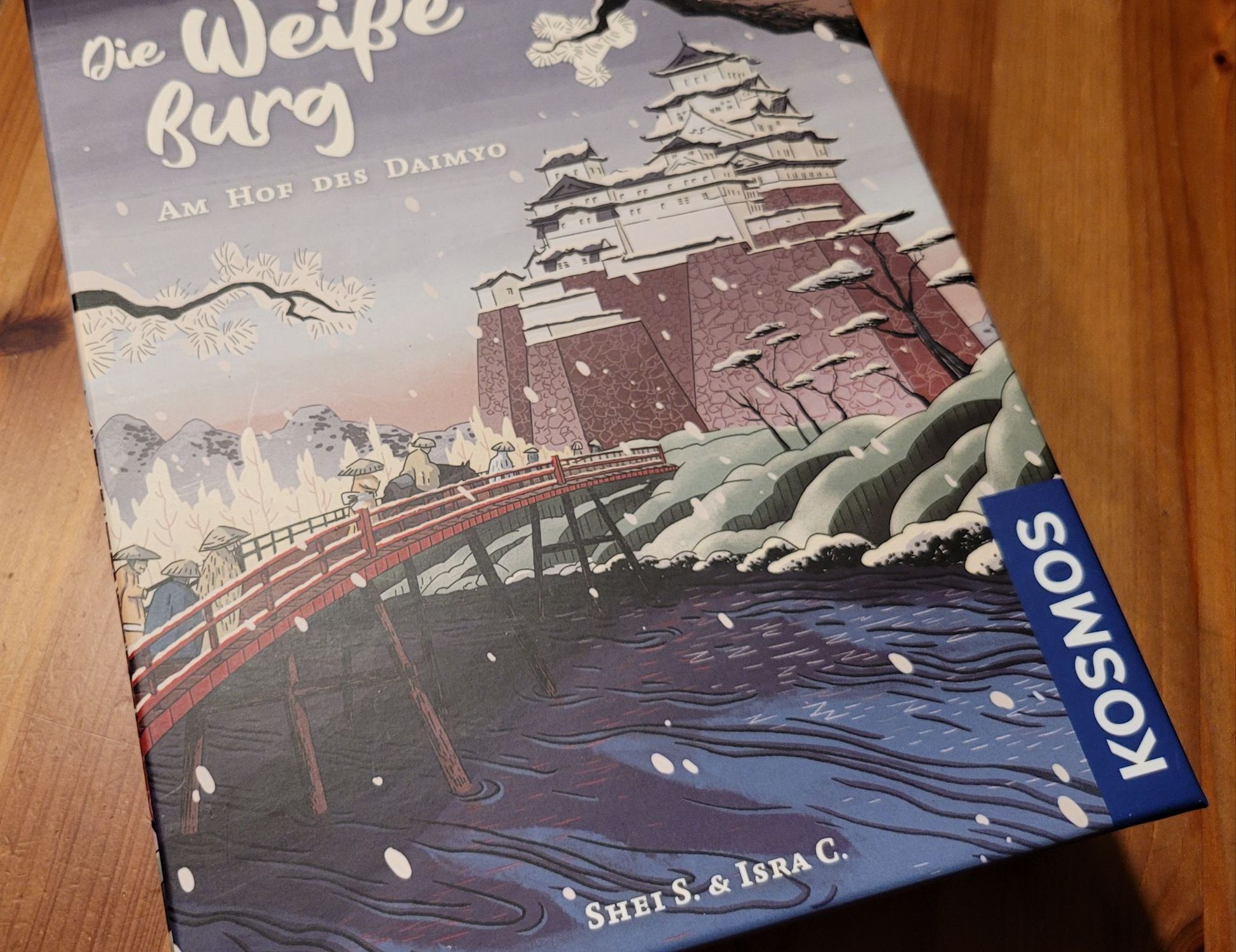
About two years ago The Red Cathedral turned quite a few heads among the veteran gamer crowd. It was a small, handy box with lots of components and an unexpectedly intricate design. With The White Castle we now have something like the spiritual successor to that game. Its box is similarly small and crammed with components. And again, the game’s rules are impressive. Their design is somewhere between elegantly interlocked and obtusely entangled.
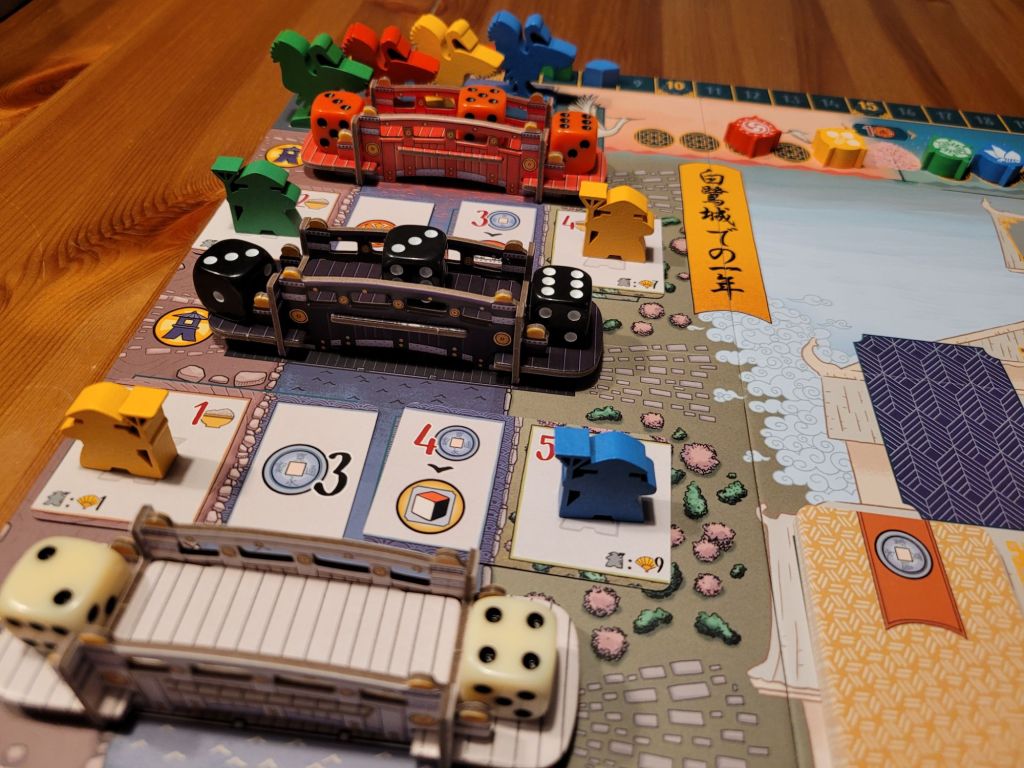
Once again the game’s core traits already announce themselves in the rulebook. In it the central actions aren’t so much explained, as their execution is detailed. This is a subtle, but fundamental distinction when it comes to learning and understanding a game. Because it is noticeably easier to grasp a game, when you’re able to clearly name the effect and purpose of the actions you take. You may know that you have to take a die from the left side of the game board to place it on a specific space, which in turn lets you gain resources, spent them or place one of your tokens on the board. But if you haven’t understood the goal behind those actions, you will most likely wander around aimlessly as the game goes on. Consequently, during the first few games of The White Castle play feels more like an experiment kit, as opposed to a tightly knit web of incentives, you should shrewdly maneuver through.
It’s often not quite clear why one action is more advantageous than another. Put more generally, it’s not always apparent which dice action gives you a tactical and which gives you a strategic benefit. Making this distinction really only becomes possible through sufficient experience with The White Castle. Which is to say you need to play training games repeatedly to get there. It is this layer of obscurity that might keep some groups from getting into the game’s flow. The White Castle posits itself exactly on the fine line between intriguing puzzle, that reveals its secrets only to the most studious players and an irritatingly convoluted arrangement of conflicting incentives.
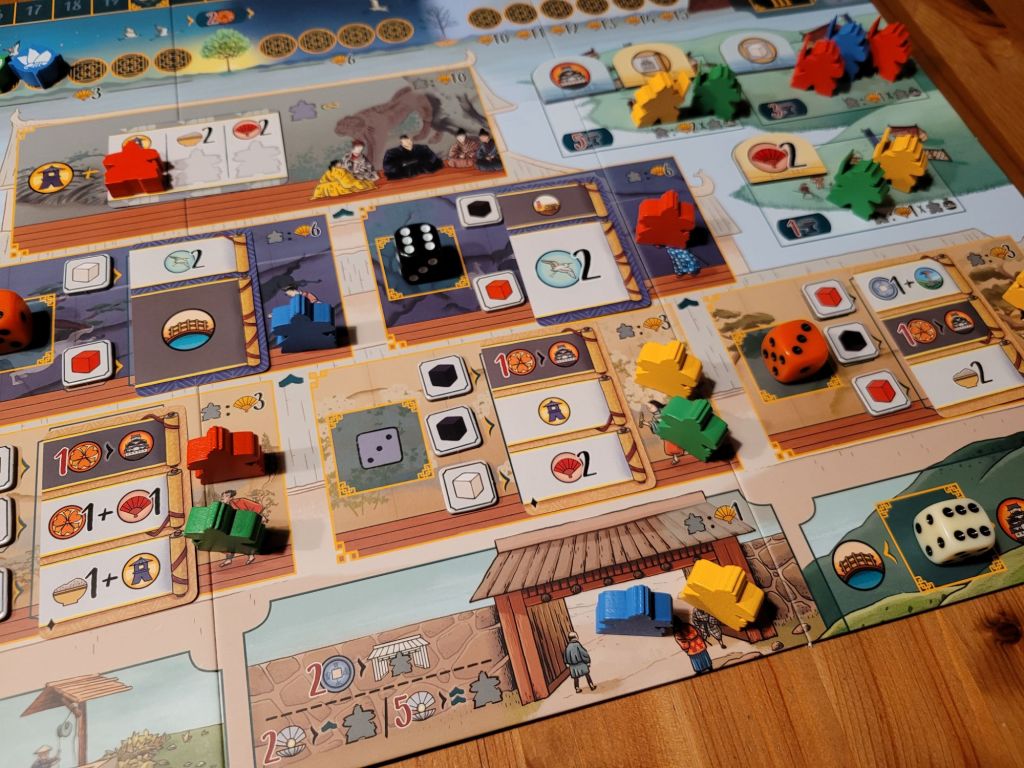
To be blunt, playing The White Castle well or at least understanding it well enough to play fluently, is work. Once you’ve made your way through the rulebook, you’ll find yourself locked in the rigid stare of deep thought, as you calculate, puzzle and weigh the various options available to you on the table.
The White Castle is a convoluted game. Its compressed design may present itself in a visually arresting manner, but play itself is pretty arduous. It’s like going on a run daily at 6 am. With some people this results in a firework of endorphins that will carry them through the rest of the day (or at the very least the rest of the morning).
Unfortunately like some other gamers, I am not one of those people of the morning run. I’m more likely to ask myself why I should put in so much effort. Because there are a great number of options, to have just as much fun. All without piecing together all the information I need form the game board and fusing it into something useful in my head.
Most of the time in The White Castle is spent imagining your turn, thinking through its consequences and occasionally comparing its cost-benefit ration with other options. As soon as you’ve made a decision, your participation in the game ends for this turn. In a very general sense, this is somewhat reminiscent of Chess. Although Chess presents a far cleaner and easier to read board state. But at least the components in The White Castle are nicely colorful.
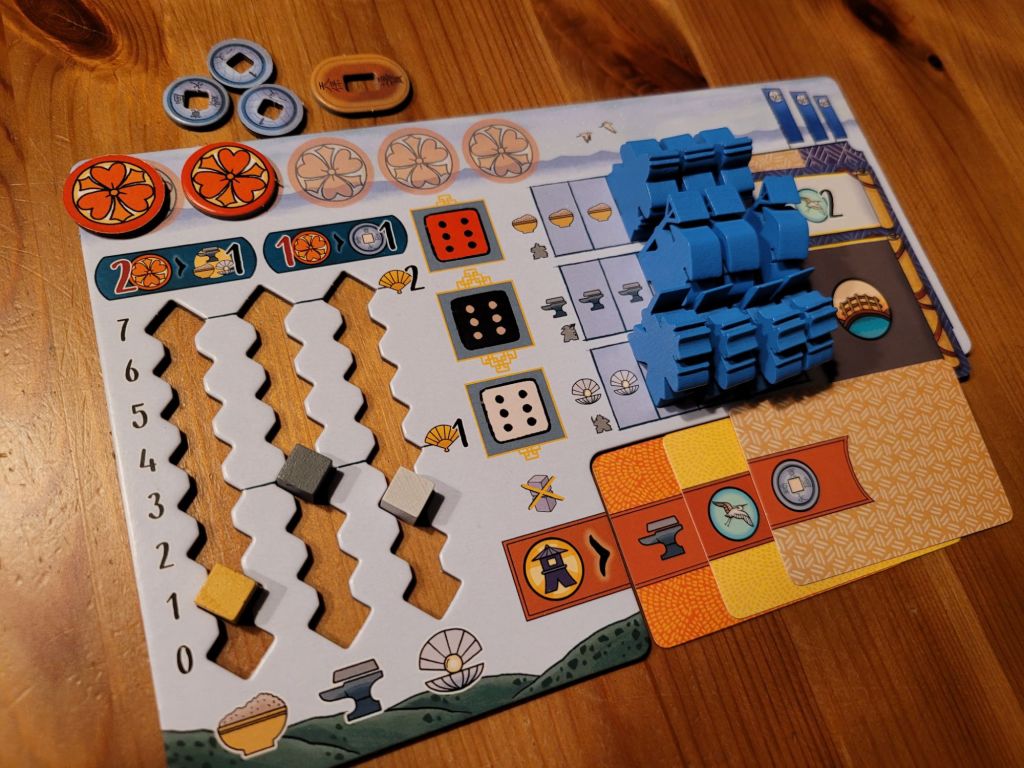
It’s impossible to deny, that within its compressed and compact design, there is an interesting core to the gameplay. With each game you become more familiar with its possible combinations and chains of actions. What starts off as a sluggish experience becomes increasingly fluid to play with practice. When the game hits the table again after some time away, though, it becomes even more apparent how labyrinthine your plans have to be in order to score points.
Voluntarily overcoming superfluous challenges often gets regurgitated as the essential nature of games. If that is true, The White Castle should be a success in every way. But this often smugly delivered bon mot tends to ignore that players also play games to relax and entertain each other. This is not something that The White Castle is particularly good at.
It’s a game that plays to a very specific niche. Players who like a design that asks them to put in some effort, will appreciate what The White Castle has to offer. To all others, it’s a game that requires quite a bit of focus and mental energy to play. Which in turn means its appeal is limited.
 Lest My Opinions Go Unheard