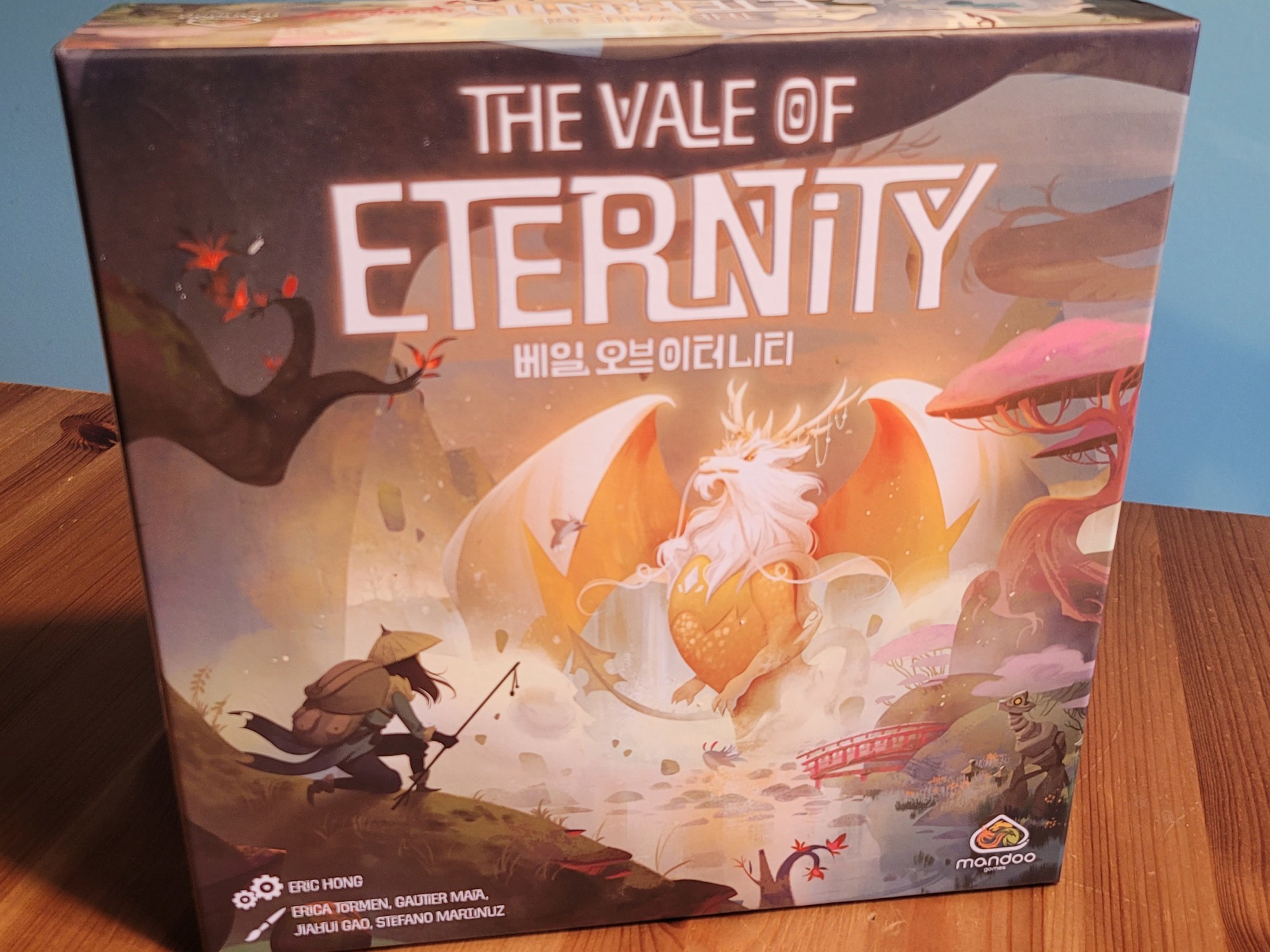
Many games put a lot of stock in the replayability of game. Something that’s usually identified by the many ways you can combine its components. This rules effect can be combined with that one. This starting set-up might play differently from another. Its best encapsulated by asking how many plays it takes for player to “have seen everything”. One thing that gets overlooked, though, is that a pleasant flow of the game, familiarity of the experience and just the emotional level of the game as a whole can be the reason, why we keep putting some games on the table again and again.
We don’t play games, because they’re constantly different. We play them because we feel good playing them. Naturally we reach for descriptions like variable starting set-up or changing scoring conditions to explain in rational terms where our emotional want for playing this game again comes from. That’s understandable. But the way that mechanisms interact with each other to create different game stats is often less important than the way that mechanisms affect players. It’s how we feel playing a game, that determines if we’re looking forward to the next time we play it or even the one after that.
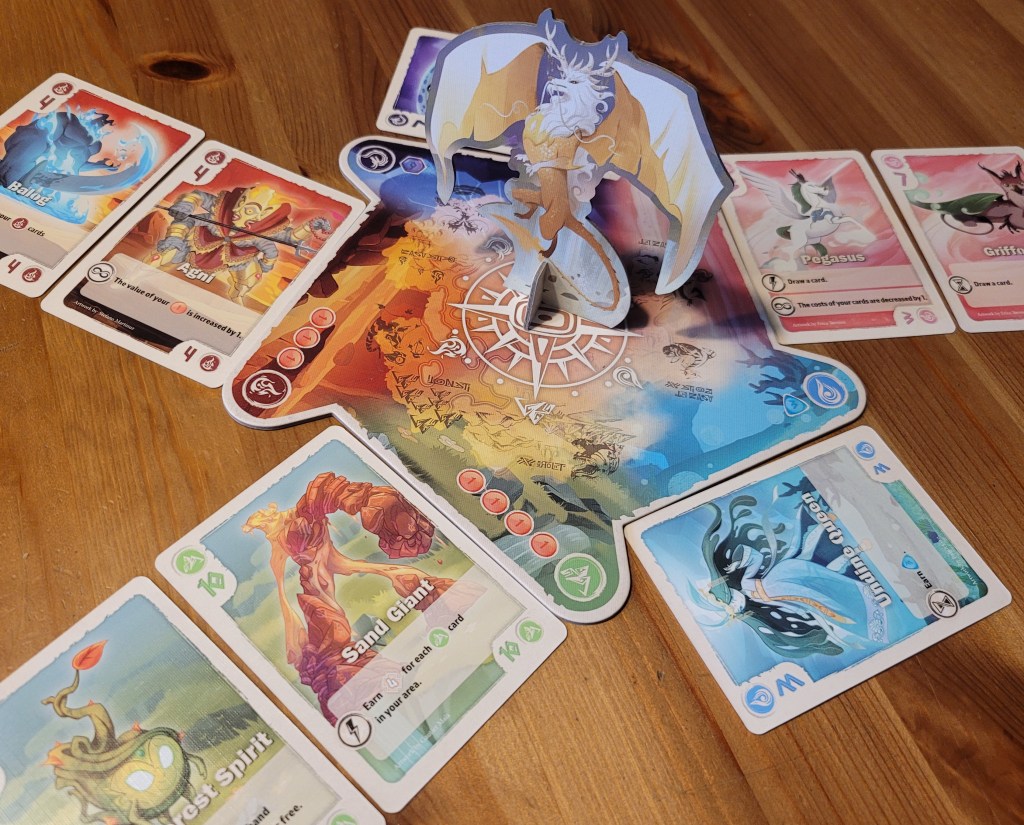
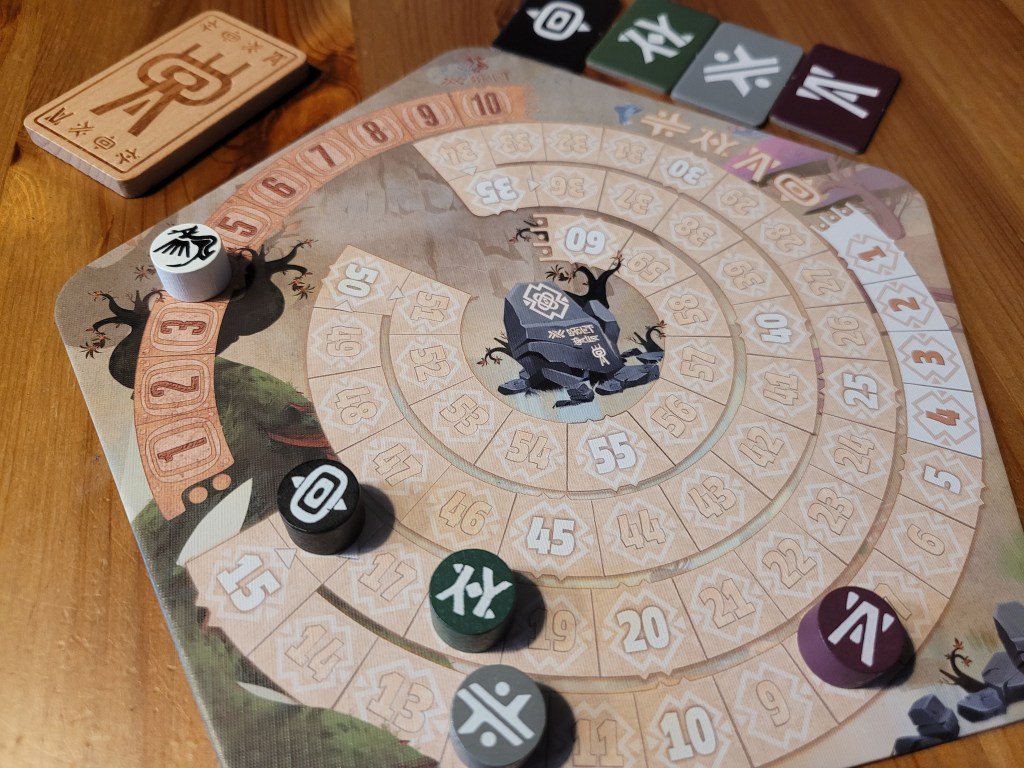
The Vale of Eternity invites another go thanks to its slim design and clear structure. Right from the start players are presented with the game’s central challenge alongside a few simple limitations: score 60 or more points in as few turns as possible. The task we’re faced with is challenging, yet manageable. A fine balance that not every design succeeds in.
In no more than 10 turns we repeat an easy to grasp turn structure: take cards into your hand, play them in front of you and trigger their effects. But each step comes with a little twist of its own. That’s how every turn offers multiple clearly delineated decision points, that draw our attention to what is happening in the game. Each turn the card display is refreshed and other players’ decisions limit our options significantly. To play a card we have to pay a number of tokens and we want to activate our card effects in most clever order. It all plays refreshingly smoothly, regardless of how little or how much you know about modern games.
But once you look “under the hood” of the design, it’s impressive how elegantly decision points are fused together to create a pleasantly paced game flow. Choosing cards at the start of the turn is tied to the tokens you need to play a card. You can either take a card into your hand to play it later, or discard it to gain the resources you need to play any card at all. In addition to that, the number of resource tokens you’re allowed to hold is limited to four. Which is just enough to let you do things on your turn, but yet so tight that you have to focus on efficiently using your cards’ effects. This subtle design decision leads to game that is in constant motion, both on the table and in your head.
It’s similarly elegant how many card effects refer to the very same things players will already be thinking about: the number of resources you hold, cards in your area or in your hand, etc. This creates a robust framework in which you can dive in mentally and emotionally. Every card combination you spot announces a small fiero moment, when you manage to trigger that combo and score points. These emotional rewards are strewn through the game and shape it into a motivating and satisfying experience. We set our own (intermediate) goals and it feels good when we reach them.
But it’s also in the nature of these kinds of combination games, that a difference in experience has a strong impact at the gaming table. If you already know which cards work well together, you will be playing The Vale of Eternity on a distinctly different level than those who are just starting out.
Experienced players will have quickly put together a mental pattern to group together similar card functions, based on whether they create resource tokens, score points, refer to your hand of cards or serve to improve other card effects. Less experienced players will have to pick up and develop such a mental grid on their own. It’s impossible to say if distinguishing more clearly by function would have helped, or if this much transparency would have taken away from the game’s charm. But in a group of mixed experience levels, I would always help new players by pointing out that cards can also be grouped by function.
On higher skill levels, The Vale of Eternity can also be tactically expanded by purposefully hindering other players from completing specific card combos. For example by taking one of the cards they need for yourself. But it might be a question of personal preference if this improves or cheapens the experience of playing The Vale of Eternity.
Hardcore gamers likely won’t celebrate The Vale of Eternity as particularly innovative or unique. Instead of an overwhelming bulk of rules, The Vale of Eternity uses its approachable structure and its easily grasped challenge, to draw in new players. Because great design work stands out because it fuses a respectable challenge with fluid playability. These are the kinds of games we like to get back to the table. Regardless of how many plays it takes to have seen all the card combinations it has to offer.
 Lest My Opinions Go Unheard