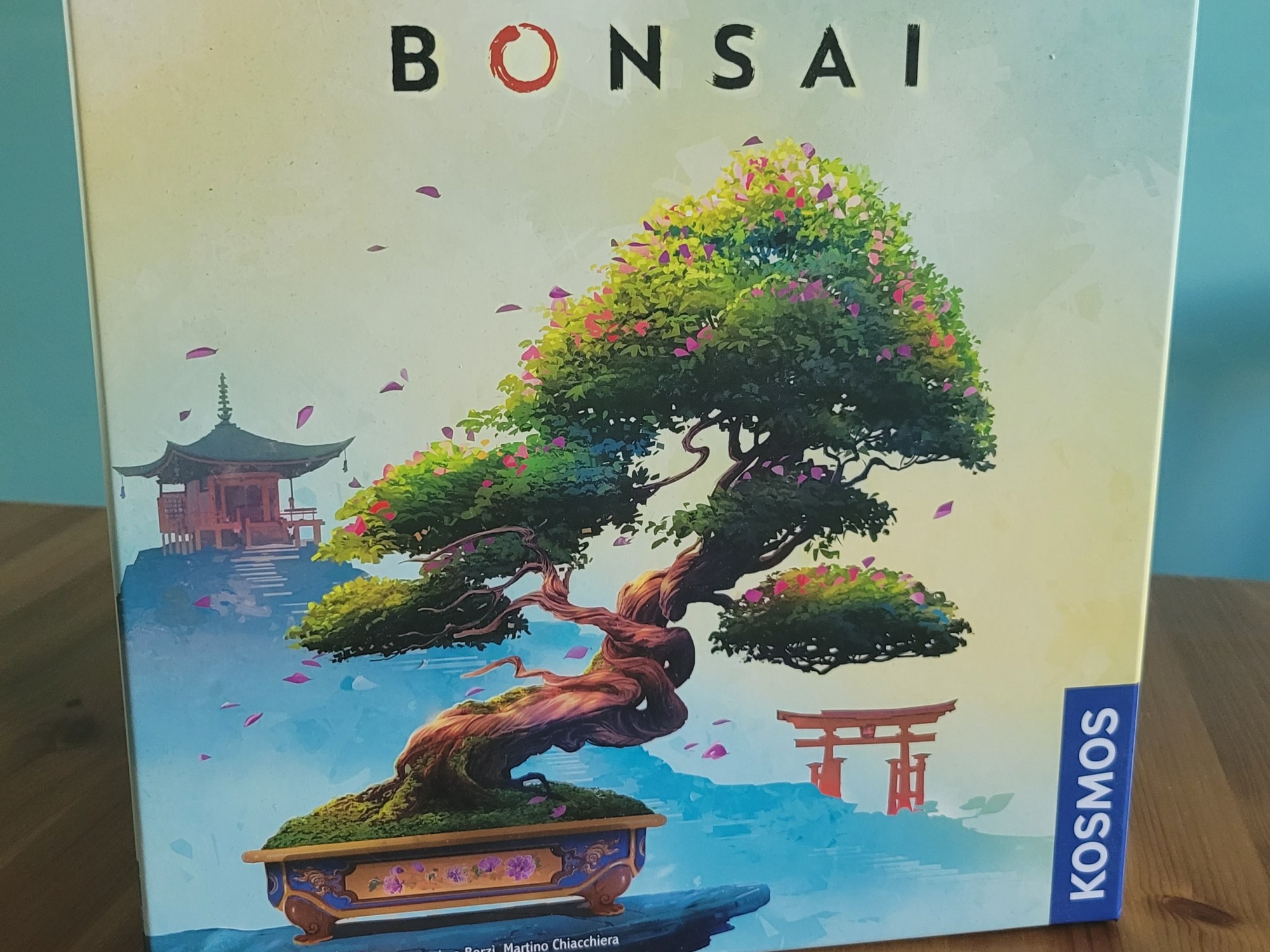
Board games are generally designed to provide a shared social experience. Our interactions create a small community of players, experiencing the game together. Bonsai, though, leans in a different direction.
Some games get criticized (or at least critically commented upon) for being solitaire experiences at heart. Most recently this happened with Dorfromantik – The Board Game. Since the rules do not assign mechanically distinct roles to players and there is no rigid sequence to the decision-making, players have to act as a group. You all have to agree on where to place the tile, you just drew. How you come to an agreement is up to you. There were no rules to guide you. Dorfromantik had you show both conversational competence as well as the ability to analyse the game state to find the right spot for an optimal point yield.
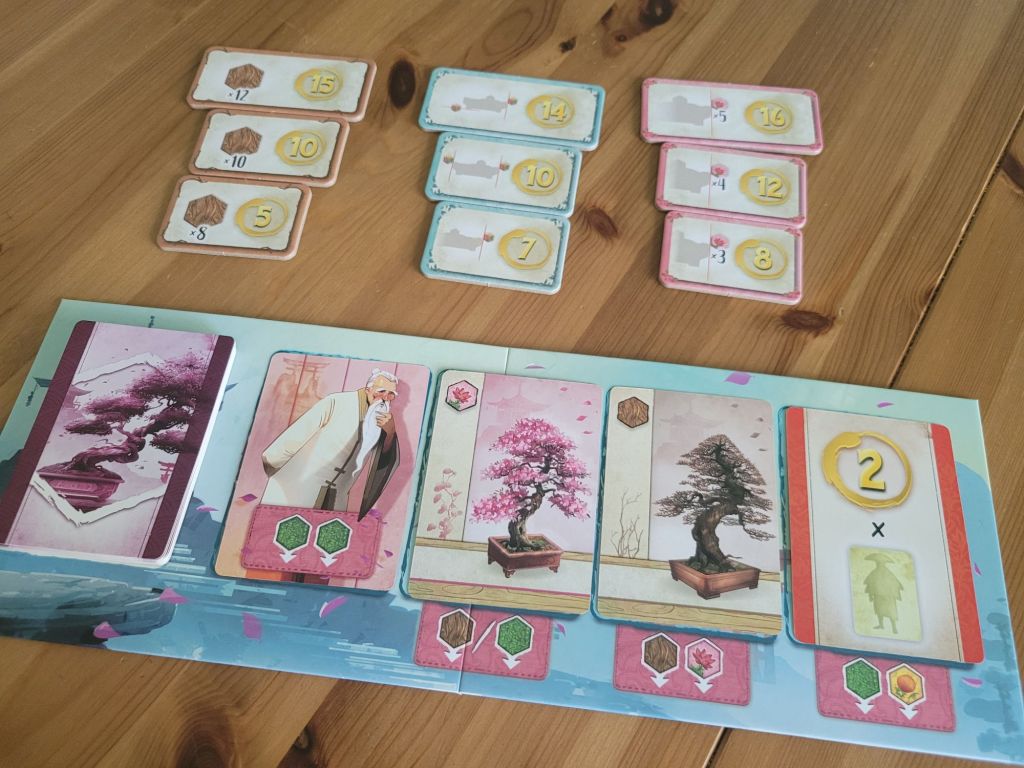
Bonsai picks up on this second design impulse. Here, too, you’re asked to optimize your player area for the most points. It is one of the smart design choices in this game, that you are always given limited options whenever you’re asked to make a decision. You can either pick one of four cards on the board (and gain tiles this way), or you can place the tiles you already have into your player area (in the shape of a bonsai). Which tiles and how many you may place depends on the cards you’ve already drawn during the game.
This narrow loop of choices and consequences gives Bonsai a strong focus. Each small, easily grasped decision opens possibilities to one side and closes off options on the other. Step by step, you weigh your options how to improve your player area (the eponymous bonsai). This makes play feel constructive throughout. Unless you’ve made a lot of bad decisions, your tree will grow continuously. But this narrow focus also ties successes and challenges to you personally. My enjoyment of the game is mine alone, and not one I can share with others. It’s only when the game is over, that we can appreciate what other players have achieved.
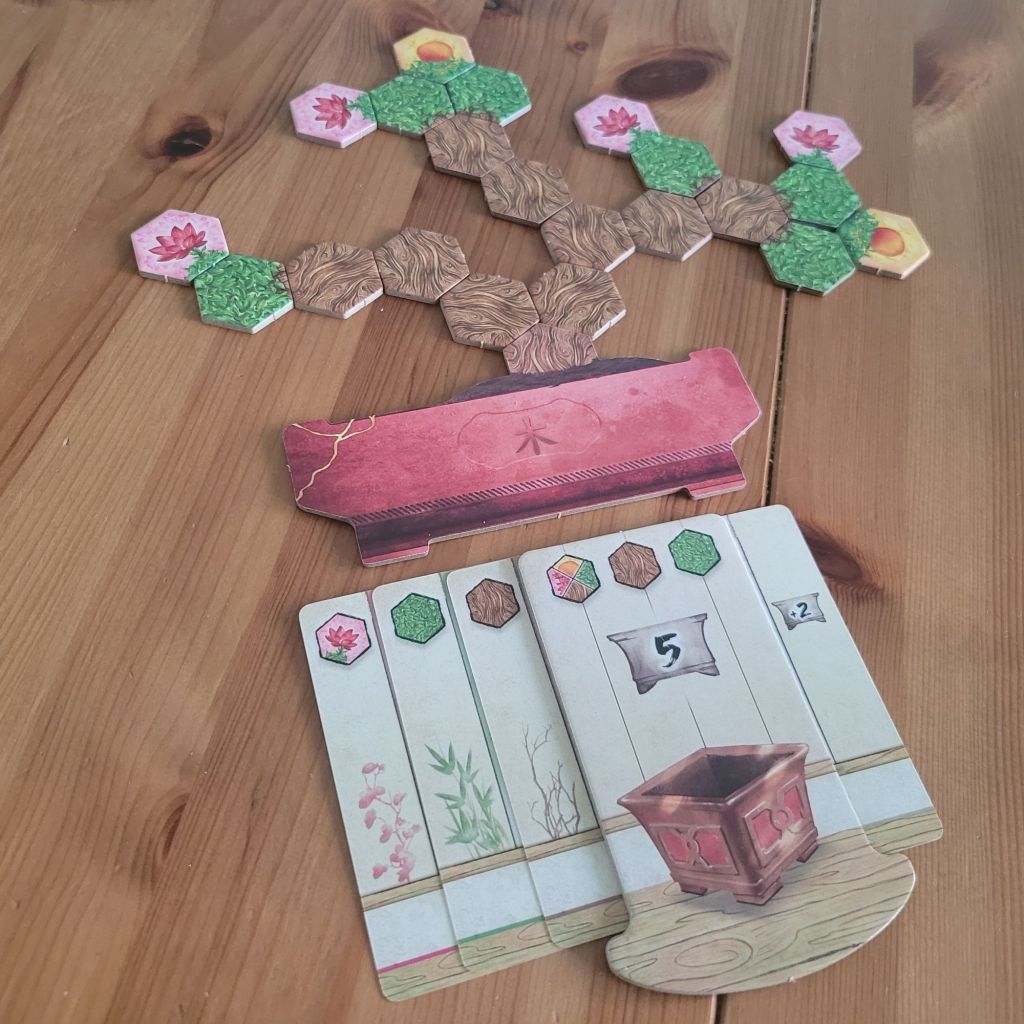
This is how playing Bonsai resonates with the game’s theme. Much like caring for an actual Bonsai requires careful and concentrated effort, we find ourselves in a role where we similarly need to be careful and focussed to complete our task. This isn’t unusual for a game in this genre, but the thematic scaffolding fits particularly well here. It is a much better fit than in games where we trade goods across international waters or design natural parks in North America.
But Bonsai can’t quite let go of more traditional design structures either. Competitive elements are strewn into the game to remove the meditative calm of its theme and inject a sense of urgency into play.
There are scoring cards in the deck, which let you score additional points at the end of the game. Your growing your bonsai isn’t directly affected by them. But you might feel encouraged to optimise your tree’s growth in that direction. Additionally, there are always three kinds of scoring tokens in play, which you may only take for yourself, if your tree fulfils certain conditions. The more challenging (and time-consuming) the condition, the more points you score for it. You enter a kind of race with the other players to grab one of those tokens before somebody else does. A sneaky glimpse at the bonsai across the table becomes inevitable.
You get the impression that the publisher or the designers ran out of courage to put out a straight-forward solo game. The competitive element in Bonsai feels artificial, even if it is cleanly interwoven with the rest of the game. But the page with solo challenges in the rulebook suggests where Bonsai’s heart lies. Because the reason you pull Bonsai out of the shelf again and again, is the experience it offers to you individually.
It is the calm playstyle and the possibility to improve with time leisurely spent playing, that makes Bonsai so appealing. It’s a game to relax with and enjoy yourself with a not too taxing challenge.
Some people do the crossword puzzle in the sunday paper, to enjoy a quiet afternoon at home. For board gamers, there is now Bonsai.
 Lest My Opinions Go Unheard