
I was listening to a podcast recently, when one of the hosts argued that people are drawn to role-playing games, because they are a safe space in which to experience emotions. It’s a thought I found quite appealing. After all, the emotions that games evoke create memories. And it’s this experience that keeps pulling us back to the table. But calling Cabanga an emotional game is a stretch. It’s a small card game with simple, non-taxing rules. The only people who’d struggle to correctly attribute its card numbers are small children and people who shouldn’t get behind the steering wheel tonight.
The game’s setup and turn structure are neither particularly important nor challenging. It’s a card shedding game, where the winner is whoever runs out of cards first. You play numbered cards from your hand, into one of two color-appropriate piles. The numbers on those cards create a range. If somebody has a card in hand that falls within that range, they yell out CABANGA!. And then you rejoice or are annoyed, depending on whether you get to discard cards or have to draw new ones.
Mechanically Cabanga is nothing to write home about. The ease with which you can explain it mirrors the depth of gameplay it offers. That said, the word “gameplay” may be misleading here. Cabanga is the kind of game that thrives off its metagame. Usually, this word describes the tactical and strategic considerations that happen one level above the game itself. We speak of a metagame, when we talk about the assumptions that players bring to the table and how we include them in our strategies.
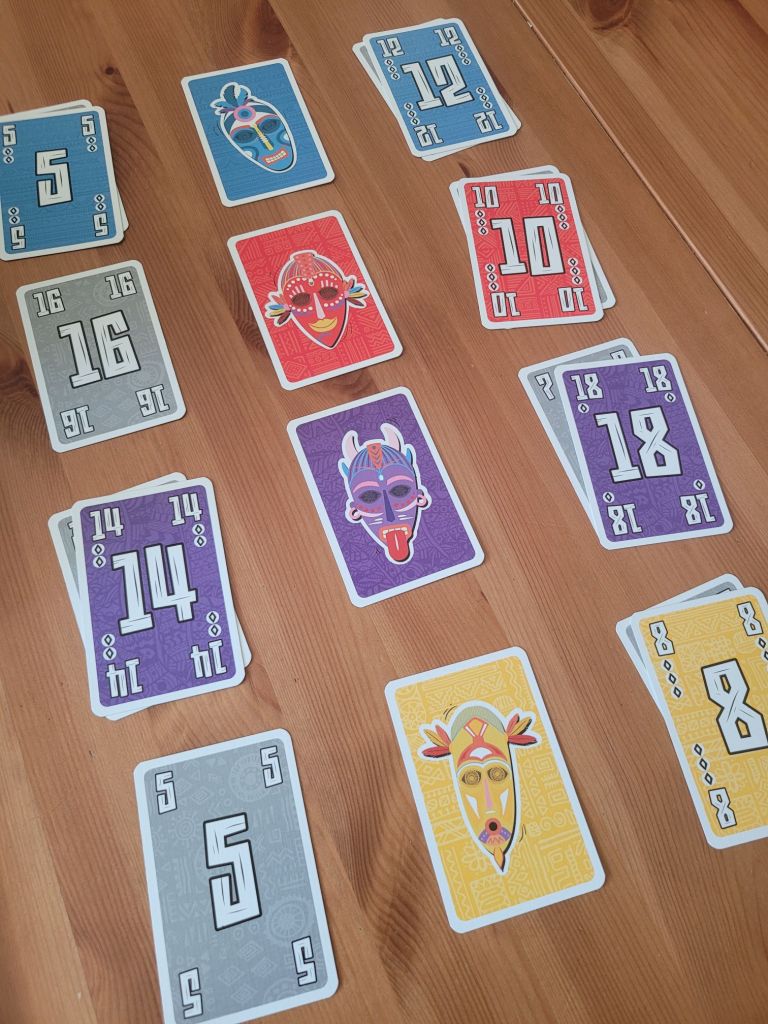
But that is not the kind metagame that Cabanga relies on. Instead it’s more of a literal interpretation of the word. Cabanga’s metagame is about how you play the game, not how you win it. Cabanga’s defining (but not necessarily unique) quality is how it allows players to turn their emotions into a performance. The game’s most entertaining moments happen, when we intentionally overact the emotions we feel. Whether it’s shaking a raised fist out of feigned anger, or the excessive whining over this awful hand of cards we’ve been dealt. Or the vocal outrage at whoever yelled Cabanga just as we tried to play our final card to finish the round. With each round our repertoire of comically exaggerated reactions grows. Sometimes we get to suffer the indignity of an endless string of bad luck, and sometimes everything’s coming up Milhouse and we get to bask in it.
Cabanga is a game that lets us play out a fake competition to entertain ourselves. The simple gameplay and the low tactical depth make sure that at no point will this performative competition run the risk of actually turning into a serious match between players. The scope of emotions we feel is just so that nobody will ever worry about losing face. It’s not only “just a game”, it’s really just emotion theater.
Admittedly, you don’t need to have Cabanga on the table for this. There are certainly other games that prompt us to perform our emotions more reliably and regularly for each other’s entertainment. But Cabanga is one of those games. No more and no less.
 Lest My Opinions Go Unheard