
Some time ago, I was asked if I really thought that players don’t critically engage with the games they play. That is to say, they do not question the game’s theme or reflect on their actions. My answer was a quite unequivocal “no, I don’t think they do.”
To be clear, I’m not accusing players of indifference to those things. Because it is clear that players are drawn to a wide range of different themes. I am also well aware that players groups do not routinely abstract their actions to the level of semiotic hollowness. Games like Spirit Island and Molly House are held in high esteem, because players are so invested in the narrative layer of those games. But all this isn’t proof of a critical engagement with a game, in my opinion.
In most cases, looking at a game’s theme critically means that players evaluate its setting. A theme that relies on a specific culture (e.g. Kauri which is set in New Zealand) is often considered inappropriate or misguided, if none of the people involved in it have some cultural connection to the culture itself. It’s also common to look at the game’s use of stereotypes or clichés, and whether they are mindlessly reproduced or rejected. Engaging a theme is seen as particularly critical, if the use of stereotypes can be named and argued against.
Settings, that make use of explicit historical and real world events, are often compared to the current (or even one’s own) level of knowledge. Do places and objects have the right names for that time? Do the presented characters in the game belong to the groups they should belong to? Do the situations that arise during the game conform to our understanding of the actual events? It should become apparent by now, that engaging a theme critically has more to do with comparing its setting to a list of established facts. It is not the same as interrogating it with a critical mindset.
When it comes to reflecting on our actions, it is again the setting we start from. Which is to say, that we first have to translate our actions into the language of the game’s setting. Depending on the game, placing a token can be seen as spreading political influence, conquering an area or constructing a building. If we take the game’s thematic foundations seriously, we make use of the words the rulebook attributes to the components (“My thieves guild inflitrates the city, and costs you money and prestige.”). If we don’t care about the theme, we simply revert to a prosaic description of the components (“I place a blue cube, and you lose 1 yellow and 1 red cube.”). When players reflect on their actions, they always do so in response to their own translation skills. Depending on which words (or imagery) they use to describe their actions, this evokes a response (or indifference). Most people will not consider moving a token from space 4 to space 2 a particularly expressive event. But when we play a game like Fate of the Fellowship and doing the same translates into losing hope, this choice of word alone, adds something to what is happening at the table.
So, if we want to reflect on our actions, we first have to use the right vocabulary for it. Only then do we have actions that are worth talking about. But even if we allow that players use the game’s language to translate their actions, and we trust that they have the storytelling skills to weave those actions into a larger narrative: the result is still evaluated and considered within the imagined framework we have built out of the game. We look at our actions within the snow globe of the game’s theme, and evaluate it within this virtual framing.
Our shared play serves as inspiration for a game of hypotheticals, we derive from the game’s setting. So it should come as no surprise that some players feel deeply uncomfortable with themes around WWII. It’s not the moral judgement and indignation over the actual events that matters here. Instead players respond to the imagery that the game implies. To immerse yourself in the perspective of a Nazi general or soldier of the Wehrmacht feels repulsive. The disdain for these ideas already exists, but it seems as if the game pressures you into exposing yourself to these mental images.
In both cases the idea of immersion takes centre stage. That is precisely why I don’t consider this form of engaging with a game not as a critical interrogation of its theme, or reflecting on one’s actions. Evaluating a game’s setting as to how inducive it is for our sense of immersion, is not the kind of critical engagement we’re talking about here. Just as our reaction the imagery, which we construct ourselves using the setting’s language, does not result in thinking about our actions. When we respond the game state and the metaphors we use to talk about it, we are simply playing the game.
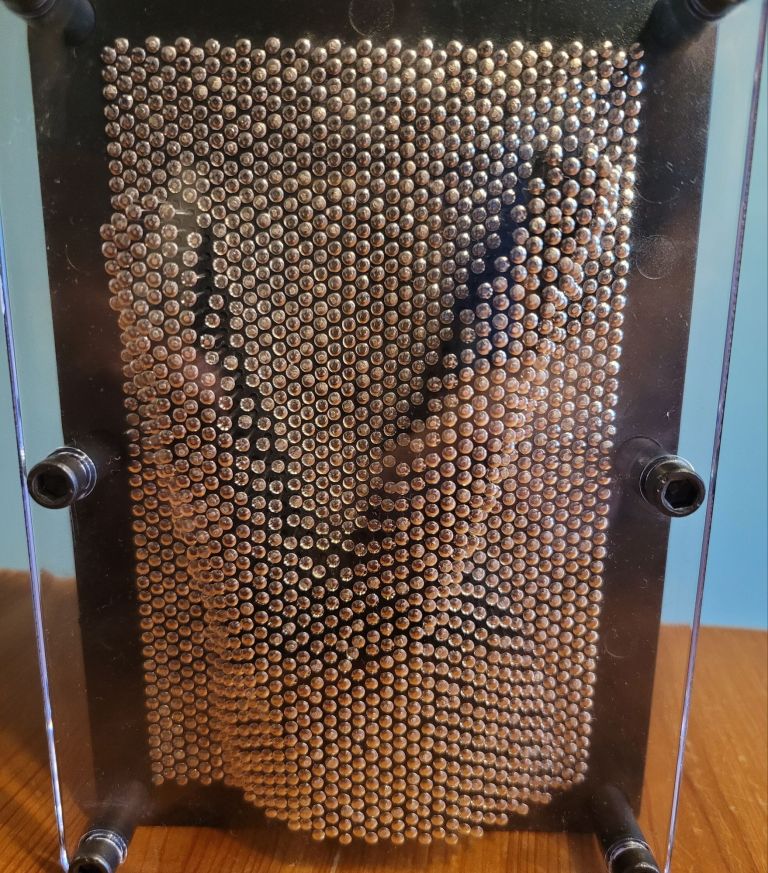
In the circle of our fellow players, we experience a fiction derived from the actions we take in the game and translated into narration that culminates in a thematic experience. When I move my tokens across the board and then roll dice, I take an action following the rules of the game. When I describe it as an “attack on the ships in the blue sector”, I’ve added narrative flourish to it. When we later talk about the number of dead my attack may have resulted it, and how that makes me feel, I don’t step out of the game to reflect on my actions.
Instead I simply build on an impulse to play, that children already know from sitting in a sandbox. When they “bake cakes” and offer it to each other or their parents. It’s the act of play itself, to transpose the physicality of playing the game into a piece of thematic narration, which we then refuse to treat as trivial. It’s the same impulse Johan Huizinga recognized to draw a direct line from playing games to (doing) culture.
So when we talk about the number of victims of my attack on the blue sector and pass judgement, we do not in fact question our actions. Instead we extend the act of play (or the magic circle) beyond the confines of the game itself. We are continuing our playthrough by still constructing the story of it.
The only way to critically engage with a game’s theme, is by paying close attention to how we talk about our play and not how individual actions within the game make us feel. How do we connect our actions into the thematic vocabulary of the game? What parts do we exclude when we imagine our actions? What ideas do we add to how we imagine the game’s fiction? All those opening questions ultimately drive us towards a far simpler one: “why?”.
Why do we create this thematic experience out of the components of the game itself? It’s only when we begin to answer this question, that we can seriously talk about whether a game’s theme is worthy of praise or critique.
What a theme “does” to us, isn’t just a matter of our emotional response to it. Games are an interactive “medium”. They guide us towards doing certain things and drawing certain connections with regards to the theme. That is, in my opinion, what criticism should be looking at.

