
Let’s start with a comparison: the importance that graphics have for video games is the same as the importance that a theme has for board games. The interactive environment of video games use graphics to first create a user interface (examples include Elite or Asteroid), then a visual scenario (see Space Quest, Wing Commander, etc.) and eventually a virtual world (e.g. Grand Theft Auto V, Dragon Age III, etc.)
Of course, players can always expand what they see with their own ideas and explanations. Not unlike a book, we take hints and implications and (with a strong dose of imagination) we turn those into a vivid game world in our minds. Video games obviously use a wide range of tools and techniques to provide these hints (e.g. dialogue, sound design, etc.). But to keep the length of this article at least vaguely under control, I’ll just use graphics as the primary video game tool used to create a more engrossing experience.
As technology progressed, these hints became more precise and unambiguous. Until graphics eventually conveyed important gameplay information solely through pictures. If an in-game object visually resembles a ball, you don’t need a long-winded explanation what players can do with it. This change in our understanding of a game isn’t trivial. In product design, the term used for this is “affordances”: the quality of an object’s shape and/or look to convey its application. A stool is for sitting. A ball is for kicking. A car is for driving.
It’s worth noting, that the more detailed and realistic the graphical presentation of the object is, the more affordances we attribute to it. A particularly realistic bar stool suggests, we may be able to move it around, stack it or throw it through a window. A particularly realistic football may be picked up and balanced on something, as well as kicked. A particularly realistic car may have a glove department, an engine to repair or even back seats to store things in.
Such an evolution, a level above individual objects, can be seen in the Sid Meier’s Civilization game series, I think. The newest entry would surely face harsh criticism, if player options were as limited as they were in the original game from 1990. The micro-management that this game – and its entire game genre – is known for, is closely connected to the developments in technology since then. My point is not to devalue those games as simplistic or primitive, but to point out that our expectations – not least of all due to our understanding of the evolution of computers over time – is to a large extent tied to how modern a game’s graphics read to us. You can find comparable changes in long-running series like Final Fantasy, Doom, Metal Gear and many more. The larger the pixels, the lower our expectation that these games will offer us many options.
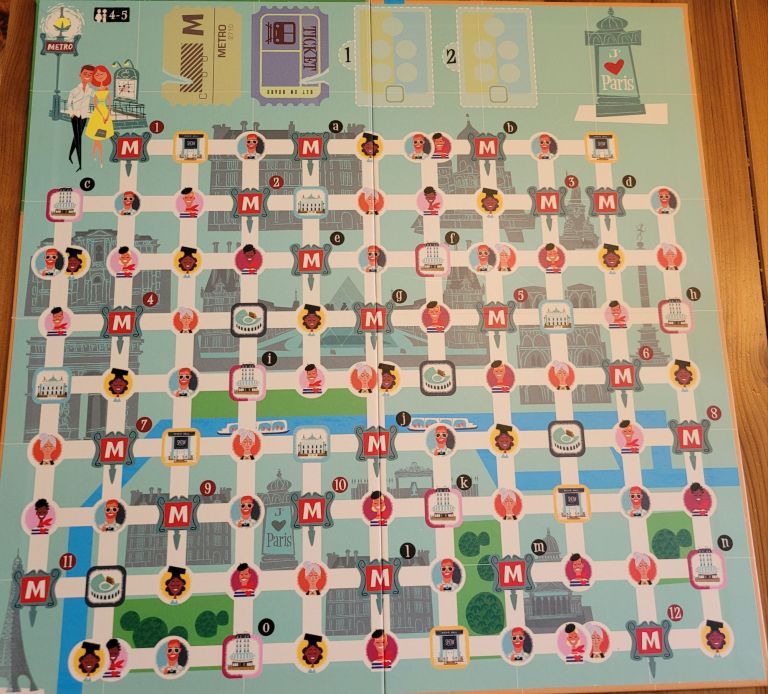
A board game’s theme works the same way in regards to a game’s rules and gameplay interaction. The interactive environment of the game uses theme to first create a user interface, then a visual scenario and eventually a virtual world. Unlike video games, in which the processing power of the computer eventually reduces the need for player imagination to fill in blanks, board games have to approach things differently. Even if miniatures, especially when painted, have been attempts to present a more fully formed theme to players.
But in actuality, with board games we still rely primarily on the imagination of players. This is where – with the help of implications and references in the game materials – a theme is created around the mechanisms. Players do not blindly execute rules mechanisms, recite the names of game elements and follow the structure of the game, but actively draw thematic connections between them and make them a centrepiece of their experience. Which in turn means, that the thematic depth and breadth of a game is to a significant degree dependent on a player’s ability to articulate those connections; and to find ways to explain in-game situations within the thematic frame of the game.
This does need some creativity, for sure. But most of all it requires knowledge to create a game’s theme during play. A board game has a number of ways to help players here. A few sentences can help to make sense of why an action space on the board requires players to spend resources on some turns and not on others. Or why a card played to the middle of the table, incurs different consequences depending on which discard pile it is moved to afterwards. These explanations can help memorize or derive a particular game rule. But they can also become a fundamental part of the thematic experience. Whether spoken out loud, articulated mentally or simply a visual we imagine: explanations unlock a game’s theme.
It’s this process that lifts a game out of the realm of purely rational decisions and blind execution of prescribed rules mechanisms and into becoming an experience. It makes us feel as if the game is telling us a story, as if there were some kind of “emergent narrative”. Even though – or especially because – we’re the ones shifting an abstract rules mechanism into a more detailed and more expansive idea of a game world. This act of transference is the main thrust that turns the basic act of playing cards, throwing dice and placing coloured cubes into an engrossing game experience.
And that is exactly the reason why the term “narrative” should be used sparingly. Because the narrating instance – the Narrateur or Narratrice – is quite pointedly neither the game, nor the designer(s). To a large extent it is the players themselves. It isn’t the game that is telling us a story; but it’s us using the game to tell ourselves a story.
In the same vein, it should be just as obvious, that the depth and breadth of a game’s theme is not entirely down to its players. A thematic experience can only include moments that do no contradict the game’s mechanisms. For example, it isn’t possible to end a game with a “peaceful compromise” in Root or Undaunted. Similarly, cooperative games like Pandemic or Sky Team will not have surprising plot twists, in which allies betray each other. Still, within the game’s framework it’s the players who have the biggest influence over the theme. Its quality is rooted in what players know about it. But it is their ability to shift what they see on the table into their own imagination that creates the thematic experience.
Just as words in a novel don’t tell a story on their own (at most they give you a plot), we have to be able to pick up on the subtler tones, the subtext, references and even historical contexts to read the story. Games benefit when players can draw connections between rules, real or historical setting, etc. and include them in their gameplay experience. The more I know about the thematic background of a game (from the specific: the housing market in Barcelona around 1880 to the vague: something once overheard about supply and demand), the closer I pay attention to how rules mechanisms work and how the game is structured. If it meshes with what I know, the game feels intuitive and easy to learn. It even plays fluidly. In some cases, it might even seem educational, when it affirms things I had to learn myself elsewhere. Alternatively, a game might seem problematic, if it doesn’t line up with what I know to be true.
At this point, it makes sense to return to the opening comparison to video games. Graphics in a video game invoke certain gameplay expectations. Photorealistic graphics suggest that this is more than a simple reaction test like an arcade game from the 1980s. Conversely, nobody expects a fully interactive virtual environment when presented with the graphical complexity of an Atari 2600. We adjust our gameplay expectations according to the graphics we’re presented with.
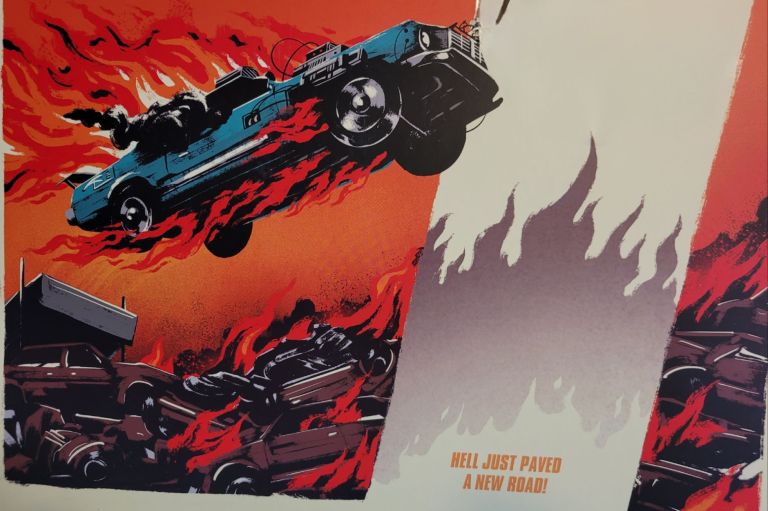
Board games are similar in that regard. With the important difference, that the power of their “graphics engine” isn’t solely rooted in the game’s presentation. Rules and components provide a scaffolding. They offer us a playable 3D model without textures. Their illustrations and game terms are things players can use, but don’t have to. They can expand our knowledge to help us turn mechanisms and interaction into a gameplay experience.
But what I often notice, when it comes to this “texture database” is that players don’t make us of it, or do so very selectively. In-game terms are ignored or swapped for more common, familiar words. Illustrations are rarely used as a trigger for our own imagination. In many cases they fade into the background and only exist as hazy ambiance or a colour accent. This shouldn’t be read as criticism. I offer this observation solely as one possible explanation why a thematic experience with the same game can seem so apparent to one group of people and absolutely incomprehensible to another.
To experience a game requires an active – not necessarily conscious – participation of its players in creating the theme. We have to transfer abstract in-game events into a thematically coherent game world. The more comprehensive our knowledge is, the easier it becomes to turn playing a card or resolving a die roll into a short tellable moment, that fits within the overall picture of the game.
That’s why how thematic a game “feels” is down to at least two important factors. If we know and understand a lot about the game’s theme, it becomes easier for us to transfer in-game events into our imagination, and thus the game’s virtual world. But we also become more sensitive towards mechanisms, illustrations, etc if they reference highly problematic ideas (e.g. King Leopold II in Bruxelles 1897, Claus von Stauffenberg in Black Orchestra, etc.). Similarly, a game can contribute towards creating its theme easier. For example by offering support in how we can shift individual game actions into the overall theme. In the past, we used terminology and images. Player pieces and action spaces were given expressive names and illustrations. Placing your player piece and taking a number of others is a very sparse mechanism. It’s easier to imagine how a farmer may go into the woods and return with lumber. The more abstract the mechanisms become, the harder it often is to find their thematic analogue. An example-based rules explanation and introduction can help here. But then this carries the risk of all those details and explanations creating a very cumbersome and awkward experience. Finding the right balance here is the biggest challenge designers, publishers and rules teachers face.
Because that is exactly where we experience a thematically rich board game. It’s a worthwhile goal, even if it isn’t easy to get there when you don’t know how.

