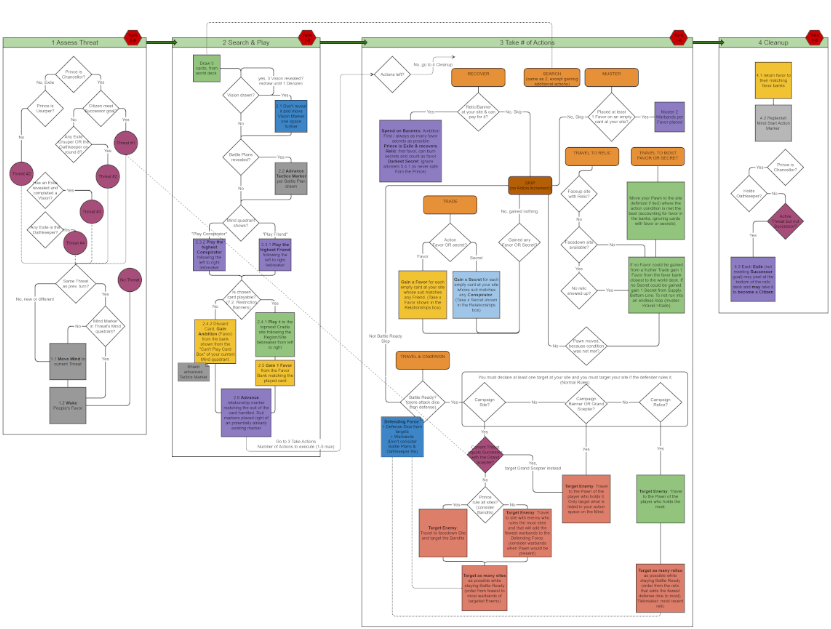
The other day I stumbled over a comment talking about rulebooks. The argument was that a rulebook should be written like a technical manual. Fittingly that argument was made by a technical writer. They also elaborated on some of the key features of good technical manuals. The instructions should be clear and unambiguous. Terminology must be clearly defined and explained, before it is used. The entire text must be structured logically and free of contradictions. In addition to that, the writing should be neither self-indulgent, nor its language too flowery.
I am paraphrasing those points very broadly, because I’m not trying to disprove or contradict that person’s position. I don’t see the need for it. But I do feel, that this understanding of rulebooks doesn’t entirely hit the mark. Yes, best practices of good tech manuals overlap to a large extent with those of a good rulebook. But I don’t think they are the same.
This becomes most apparent, when we look at their stated goals. Though they can be swapped almost verbatim, they can’t help but fall short for the simple reason that games are not machines. Even though the argument is accurate that „The goal is to enable the reader to use the game with the most ease (…)” In this case, the most ease translates to the least amount of friction.
The term “friction” needs some refinement though. This isn’t about keeping players from experiencing setbacks, losses or even harsh consequences for their actions, that might scupper their chances at winning the game. A good rulebook isn’t supposed to stop you from making tactical or strategic mistakes. It’s supposed to minimise the friction of applying a rule wrong, because you can’t quite understand how it is supposed to interact with other rules. It’s about the friction of understanding the goal you’re supposed to reach, but not seeing how the rules pave the way to get tehre. In other words, it’s about the friction you feel when a game doesn’t play as fluidly and intuitively, as a game of such volume or complexity would have you expect.
It’s this last word that weighs so much heavier with games than it does with a coffee machine or a mixing console. The expectations we bring to a game don’t just influence our enjoyment of it. They also determine to a significant degree how we will engage the game. They influence what we identify as the game’s main challenge to us, and the facet of the experience that we expect to have fun with.
Since in most cases, the rulebook is the first binding contact with a game, it matters how it sets player expectations. This is most evident in the two different editions of Magical Athlete.
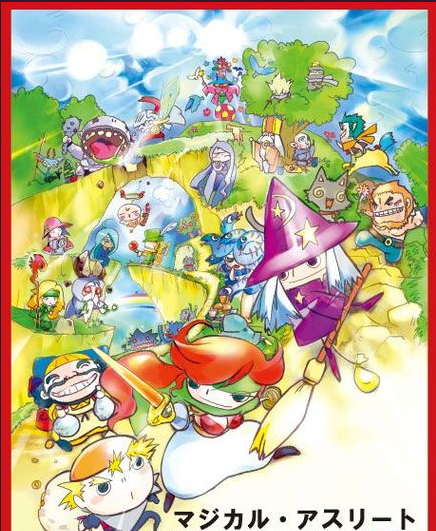
The original game might quickly be mistaken for an outdated roll & move design. The kind of game, that nobody over the age of six will have much use for. Simply executing what the rules tell us to, is unlikely to lead to a functional magic circle or – what’s more important – an entertaining experience. If you’ve been confused or even annoyed by the enthusiasm the game seems to create, you might find that rules explanations and summaries are to blame. They might accurately lay out how the game is played, but they do not help explain how the game is supposed to be approached. A strict rules explanation doesn’t set expectations, it only lays out how the rules are to be applied.
With the new edition in 2025 the game underwent a complete visual overhaul. There were also some rules changes, but those are far less impactful. The change in visual style served, above all, to completely recontextualise the experience. The garish colours and illustrations conveyed a tone, which promised a wacky, and not particularly strategic experience. The box showed a race between strange and unusual racers. (Since the distributor assumed that German board gamers have the media literacy of a newly born baboon, the German title was changed to “Turbo-Flitzpiepen 2000”. Making sure that whatever potential for humour was well and truly overplayed.)
Regardless of the path chosen, the point was to draw attention to setting the right expectations with players. This was ultimately delivered with the rulebook. The first eight pages stretched out explaining the core game loop, underlining the simplicity of the game itself. The examples – delivered by game characters talking about the rules they bring to the game – are reminiscent of children’s TV series, in which main characters similarly talked to their audience.
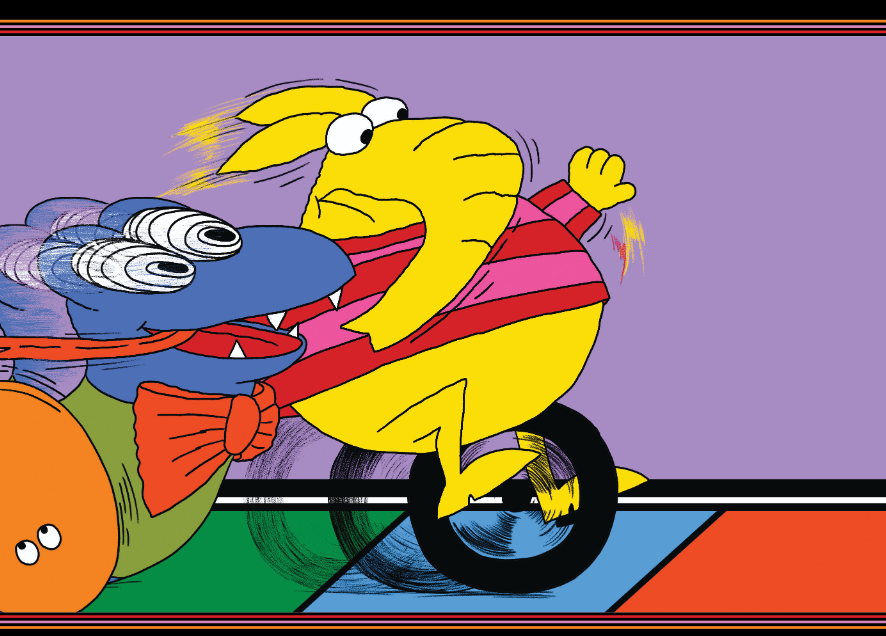
The effect of this presentation wasn’t just to help memorize individual rules. By evoking certain references and moods, they also shape expectations regarding the game itself. Expectations which will colour the lens through which we will look at the game. This is aided by the writing style of the rules themselves. Precise rules are explained in a casual, cheeky manner. This plays towards leaving players with certain expectations, even when it comes to explicit adherence to the game’s structure. As a contrasting example, in which visual presentation and rules writing are seemingly at odds, there is Root. Whatever expectations the illustrations may have set up, they are quickly dispelled when reading the rulebook.
The “best practices” of a good rulebook aren’t identical to those of a good technical manual. How the rulebook “speaks” to its readers greatly shapes their first impression (and is indirectly responsible for the likelihood of the game leaving a second or third impression). The rulebook’s rhetoric has to set expectations in such a way, that players will be able to engage with what the game actually offers.
Ideally, it empowers players’ imagination to not only pay attention to the correct application of the game’s rules, but to also engage with the thematic layers of the game. It conveys the approach the game was designed for. It gives players the tools to separate what matters from what doesn’t matter in this game. By doing so, players get to shape a magic circle that not only allows them to play the game by its rules as intended, but to also experience the game as something gratifying. Something that plays close to how they expect it to.

