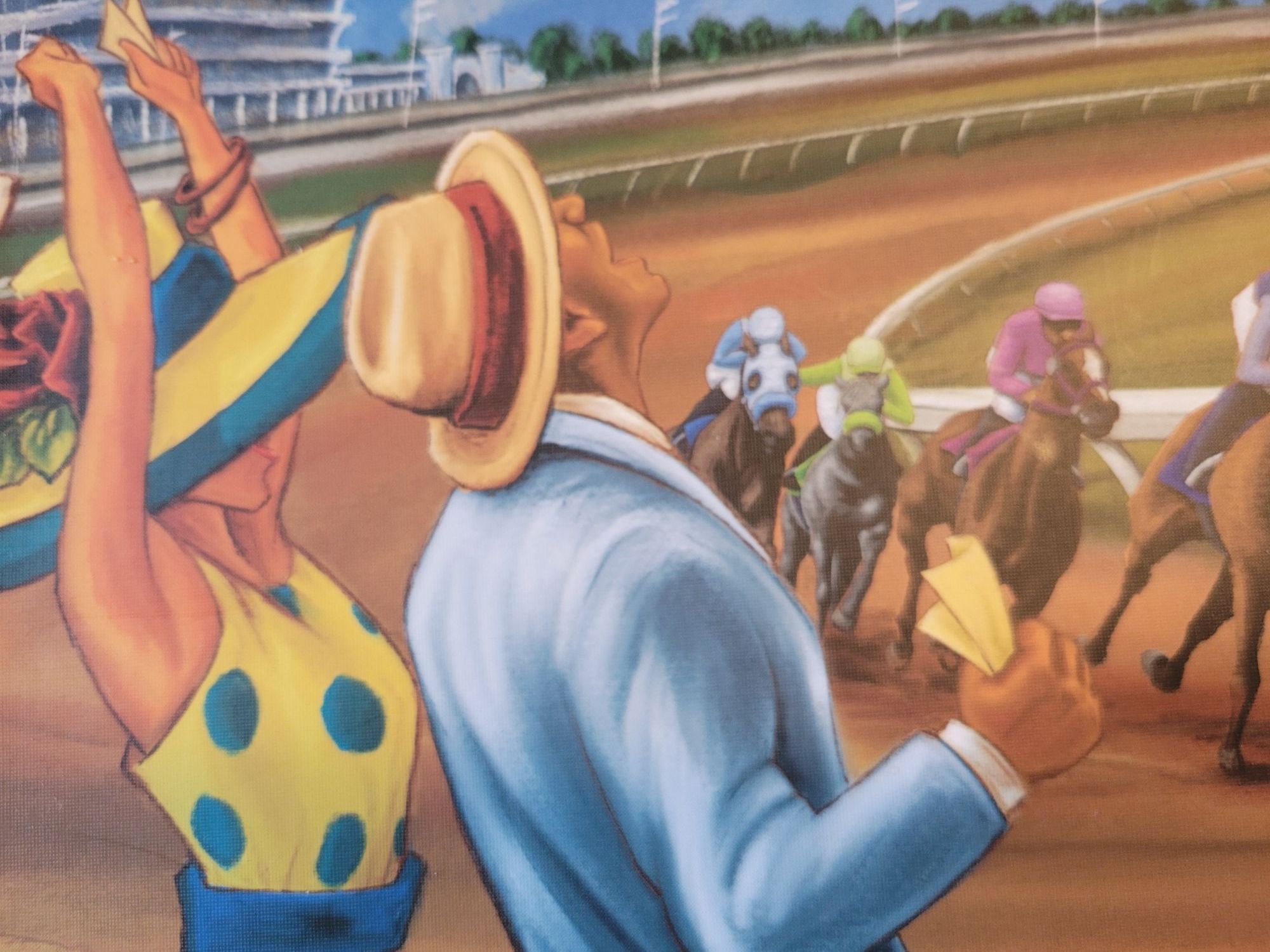
Frustration isn’t fun. There’s no arguing this point. Frustration is the emotional counter-weight to success. In a wider sense it’s the dark mirror image of agency. Because frustration is often tied to powerlessness, which is the exact opposite of play.
Ironically, this is also the reason why it is a necessary part of any game. It’s only when frustration looms, that we can enjoy whatever success we’ve managed to achieve. Where there’s no risk, success feels less rewarding. The risk of being frustrated is what gives our decisions importance. Only when there is the threat of being frustrated, do we feel tension as to what consequences our decisions will have.
From a designer, player and critic’s perspective this is dilemma. Because on one hand, we’re supposed to avoid moments of frustration. Playing a new game should feel rewarding, because we experience agency in them. The process of play should encourage us to keep playing, and lead us to remember the experience positively.
More than that, moments of frustration often have to be defended against criticism against the game. At the very least, these moments have to be acknowledged as a flaw. The designs of such games are often criticized for even burdening players with moments of frustration. Instead critics compliment games which soften such moments by offering alternative rewards. Or such designs take the sting out of being frustrated, by giving players new actions to take instead. If a game has to have moments of frustration, they need to be strictly regulated.
But any game without a predetermined outcome has to allow for the possibility of all-out frustration or unmitigated disappointment. If a game’s outcome elicits emotional responses that are effectively interchangeable, if success and failure barely feel any different, a game doesn’t evoke excitement but indifference. No thrills, little tension and hardly any sense of accomplishment. Whether it’s this action or the other, one card or another.. in the end either path results in progress with at most marginal difference.
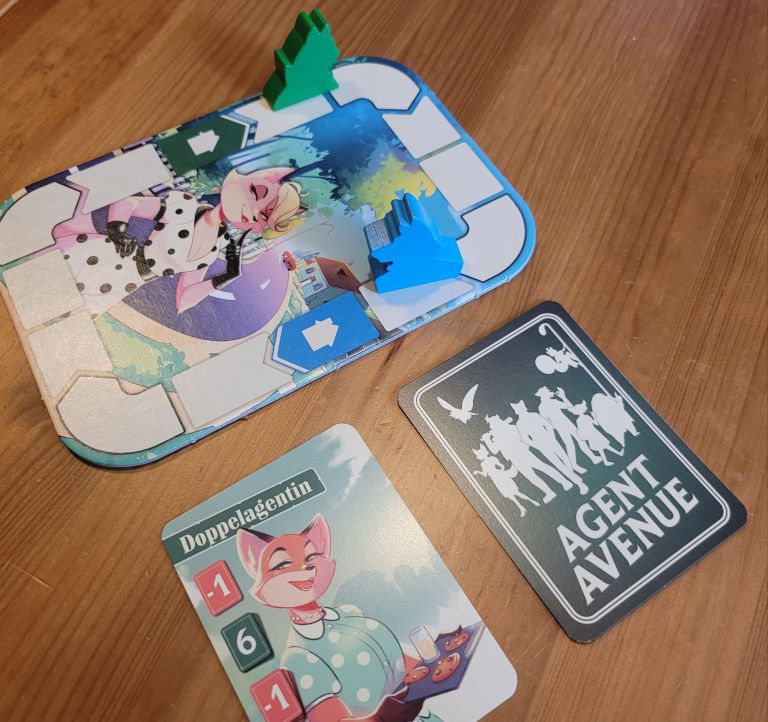
In order for such an in-game situation to feel good, it has to come about because our choices led us to this moment. If we managed to manipulate the game-state in such a way, that either result benefits us. In a game like Agent Avenue (or Hanamikoji), it’s possible to present our opponent with a decision that strengthens our position in one way or the other. In both games, this feels like a small triumph. It does so because these moments are in stark contrast to all those moments, where we worried if choosing one of the options would mean a positive or negative consequence for us.
It’s the threat of frustration during the regular course of the game, that makes unusual situations (in which we can’t be frustrated) so memorable. Without the danger of getting frustrated later on, our joy at succeeding is minimized. It’s only when my own frustration is at stake, that play feels special and emotionally impactful.
This process becomes apparent, once you put a game on the table that does little to defang these moments. These are designs in which frustration is factored into the experience.
Interestingly, the response of many seasoned reviewers to such games is often negative. They at least warn players that such games require a high tolerance for frustration. It’s a warning that pre-empts their judgment. It treats frustration not just as a negative emotion, but as one that lessens the overall experience of the game. Moments of frustration are seen as blemishes on an otherwise decently presented game. As if these things were problems of the game, that potential new players need to be prepared for. The more often I encounter these arguments, the more annoyed I am at this vast oversimplification.
As it suggests that a negative moment of play – particularly a particularly intense one – should shape our critique of a game. It implies that we don’t look at play in its entirety. Instead it’s individual moments – positive and negative – that we add up and compare to some expected value. Did the game provide more or fewer moments of frustration than what we expect of games like this? If it’s fewer, the game is good; but if it’s more, the game is an acquired taste.

I find it difficult not to see this approach as hopelessly superficial. It lacks an understanding of a game as both an experience and an activity. One that can’t be reduced to its number of successes and failures. It fails to offer a nuanced and unpretentious look at a game, that treats it as more than the sum of achievements it provides.
When we critique a game, we try to see its fully formed identity. One that isn’t made up of whether we felt fun or frustration, whether we succeeded or failed, whether we won or lost. A good game must allow for all those things, of course. But they shouldn’t be the measure we apply to tell its strengths from its weaknesses.
Naturally, I also consider the occasionally voiced counter-position – that a good game has to be punishing and unforgiving to player mistakes – similarly misguided. Here moments of frustration are read as in indicator for a particularly rewarding and intense experience. But even when inverted, the approach still remains reductive and superficial. Because our response to individual moments again replaces our view of the whole experience. Once again it’s adding up fun and frustration, that is supposed to determine, if a game is good or not.
In addition to that, elevating moments of frustration to markers of quality paves way to a particular type of personal narrative. One in which enduring frustration proves a player’s high skill level. Their early games were marked by bouts of frustration, but with sufficient plays and practice they’ve learned to overcome this frustration. They’ve acquired the skills necessary to prevent such situations from occurring in the first place. By going through phases of disappointment and powerlessness, players are expected to engage the game more deeply and understand it more comprehensively. Our inability to experience agency with a game, is supposed to provoke our ambition to dive into the game deeply. It’s this kind of intense engagement that is expected to lead to game-specific skills, which will not only minimize frustration but also make winning that much more likely.
Ironically, it’s games that don’t fit into this personal narrative, that provoke just as much anger and irritation in these players. When noticing play patterns and memorizing rules interactions does not help them prevent moments of frustration, the game is said to be too random and arbitrary. The game’s design is said to lack a level of quality, which is indirectly tied to the number of frustrating moments it has created. What’s actually being criticised, though, is that a player’s agency doesn’t seem to increase despite that player’s willingness to repeatedly endure moments of frustration.
In the end, all these criticism express their anger over the fact, that frustration doesn’t feel good. Even though it’s this frustration, as a result of one’s limited agency, that is a formative part of play. What we’re able to do within a game only becomes apparent, in contrast to all the things that we can’t do. The relation between agency and powerlessness isn’t a matter of a game’s quality, but instead a quintessential part of its identity.

